
Ars Electronica
The Ars Electronica Festival in Linz is one of the most important media art festivals in the world. Since 1979, it has combined artistic, technological, scientific, and social perspectives. With each edition the festival expands its horizons, offering symposia, exhibitions, performances, and more.
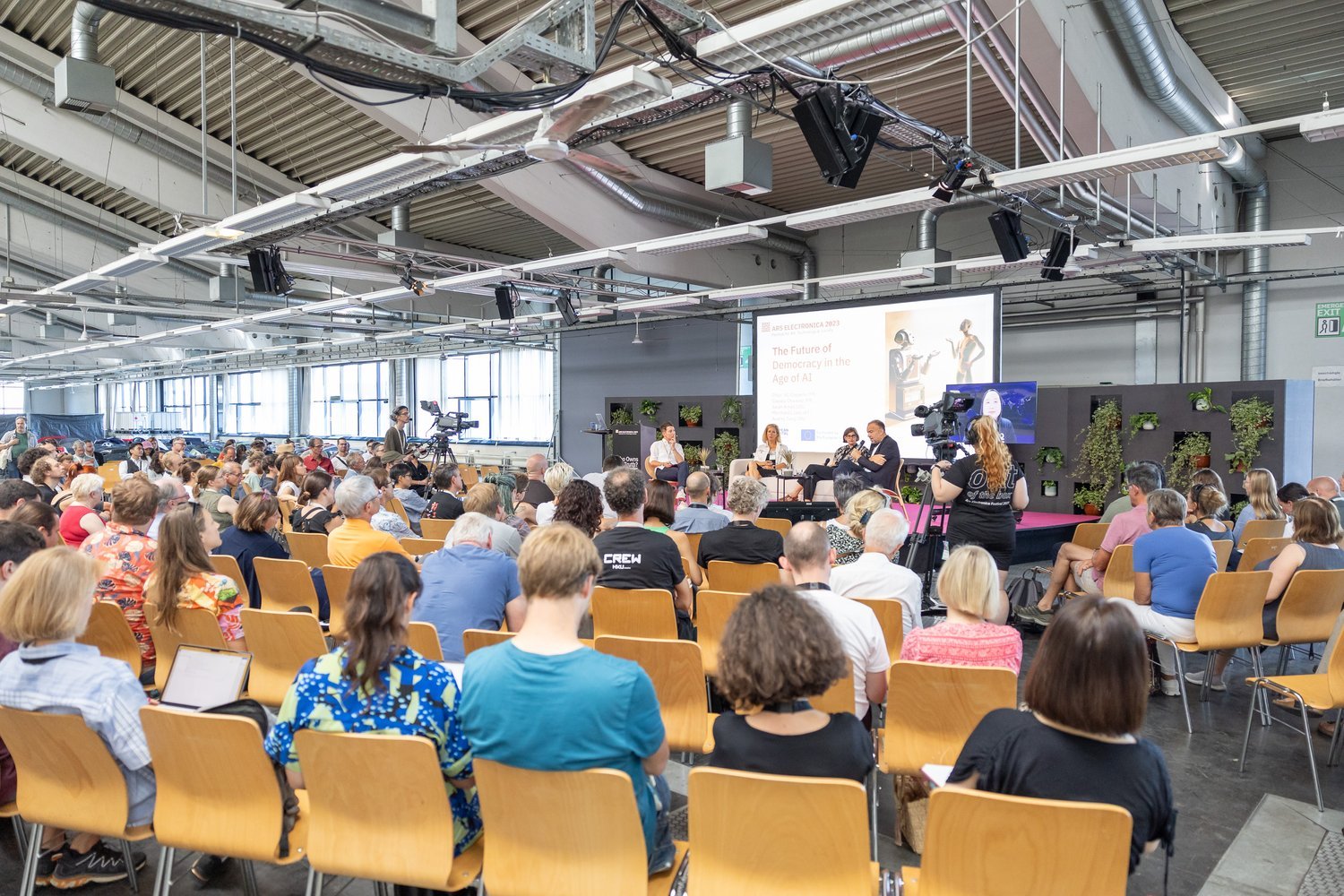
Ars Electronica23 ©Philipp Greindl
Staged Realities
In 2025, we were invited by Ars Electronica, to curate a one-day conference on AI and Theatre. The hands-on program brought to stage leading practitioners, technologists, and researchers of AI in theater and performative art.
With fireside chats, keynotes, case studies, and interactive elements, the day itself unfolded like a play. It began with a Prologue to set the scene, moving through three thematic Acts that explore the intersections of creativity, technological innovation, and social impact, and closing with an Epilogue to reflect on what kind of new reality is taking the stage.
From the ancient deus ex machina crane through Rossum’s Universal Robots, technology has always been both at the core of stagecraft and fueling the imagination for playwrights. Today, AI enters the stage, bringing new possibilities: it opens up new layers of creative experimentation and iteration, it can support institutional growth and help with audience development. It is indeed a powerful new tool, but how do we ensure we embrace it with care and understanding, while safeguarding our digital sovereignty?
AI in theater also raises philosophical and political questions. About authorship—who gets to be called an author? About suspension of belief—what does now count as real? About the human connection—what happens to stage presence when the presence is not exactly…there? In a future mediated by technology, where live presence might become a luxury, how will theater—and all of us—not only adapt, but actively respond, rethink, and reshape the role of performance?
-
Tawny Schlieski (US), AC Coppens (FR)
Opening a full conference day focused on AI and theater, the fireside chat mapped the core tensions AI brings to performative art—between human and machine authorship, presence and simulation, control and unpredictability. AC Coppens was joined by researcher and immersive designer Tawny Schlieski, whose work spans speculative futures, intelligent systems, and embodied storytelling. Through her practice in designing responsive environments and narrative technologies, Tawny brings a lens to how AI can reshape performance and experience.
-
Heather Knight (US), Brigitta Muntendorf (DE), Anders Hasmo (NO), Marcus Lobbes (DE), Stefan Kaegi (CH)
In a series of case studies, theater practitioners mapped the current landscape of AI, sharing how this technology is expanding their creative practices. The program showcased a wide range of approaches from theater and beyond. Taking a broader view, Markus Lobbes explored how technology and AI impact theatre, weighing both benefits and concerns. Robotics researcher Heather Knight explores the human factor in humor by performing stand-up comedy with a robot. Dramaturg Anders Hasmo reimagines performance as a space where technology becomes an artistic co-author. Composer and director Brigitta Muntendorf brings AI voice clones into immersive 3D sound theater, questioning presence. Stefan Kaegi showed examples of formats of theatre by his documentary performance label Rimini Protokoll using Humanoids and other robotics, computer voices and Deep Fake Technologies.
-
Matthieu Lorrain (US/FR), AC Coppens (FR), Carla Meller (DE), Nils Corte (DE), Michael Rau (US), Ali Nikrang (AT), Silke Grabinger (AT), Victorine van Alphen (NL), Pablo Palacio (ES)
Leading technologists and practitioners took the stage, to first share their speculative visions for the future, and then participate in a hands-on session to explore AI tools for the theatre sector.
A FIRESIDE CHAT WITH MATTHIEU LORRAIN
What happens when generative AI abandons its role as mere tool for automation and becomes an instrument for artistic imagination? Matthieu Lorrain—Creative Lead for AI & Creativity Research at Google DeepMind and co-founder of Liquid Logic—joined AC Coppens for a conversation on the future of creative tools. With two decades of experience shaping interactive media, Matthieu explores how new AI-driven tools can support, expand, and even rewire creative processes. A strong advocate of “liquid media”—modular, adaptive, and ever-evolving—he brings fresh perspectives on how fluid forms of content might influence live performance and audience engagement. From speculative design to hands-on experimentation, this dialogue set the stage for a practical deep dive into how tools augment artistic vision across disciplines, offering valuable insights not only for designers and digital creators but also for artists and storytellers working in live performance today.TOOLS IN ACTION
This hands-on session dived into the practical landscape of AI tools for theater and live performance. The format began with a fast-paced series of short pitches—each presenter demoing their tool of focus. Nils Corte writes and directs interactive theater with AI-choreographed robots and holograms. Michael Rau presented LLM-based live scripting, where audience input generates real-time dialogue. Ali Nikrang shared how datasets shape AI-generated music, from Strauss-style waltzes to co-creative tools. Victorine van Alphen and Valentin Vogelmann explore AI image generation as a poetic, introspective medium, shifting how we perceive bodies, identity, and presence. Silke Grabinger combines choreography with performative art and robotics, focusing on the anthropomorphization of technological tools. Pablo Palacio is one of the co-authors of the AI Toolbox, a set of open-source tools designed to support generative computer methods for creative work in the performing arts.Participants then broke out into workshop clusters to explore the tools more deeply: How does the tech work? What are the creative and operational benefits? What datasets or systems fuel it? How might these tools meaningfully shape their practice? Designed to be interactive and inquiry-driven, this session invites participants to test, question, and reimagine how AI systems might support theater—as both as an art and an operational structure.
-
Magda Romanska (US), Nora Krahl (DE), Hermann Schneider (DE/AT), Paulien Geerlings (NL)
When AI enters the stage, how to future-proof the theatre ecosystem? The last panel of the conference day wads devoted to AI and theatre, turning a critical lens on practical, institutional, political, and ethical implications of AI. In the new landscape, what is needed for sustainable growth and future resilience? As automation enters the stage, what new skills are needed? How might AI reshape labor, authorship, and the economics of production? With an operational perspective, the conversation also explored algorithmic bias, equity in creative datasets, alongside the politics of machine-made narratives.
-
Sarah Ellis (GB)
After a full conference day focused on AI and theatre, this last session brought an outlook into the future of stage magic: What possibilities emerge when theatre and AI truly share the stage? As we drew the curtain, Sarah Ellis, Director of Digital Development at the Royal Shakespeare Company, offered a visionary perspective on how technology can deepen theater’s emotional reach. From real-time immersive experiences to reimagining audience connection beyond the physical venue, Sarah explored how artistic legacy and digital innovation can coexist, collaborate, and even enchant.
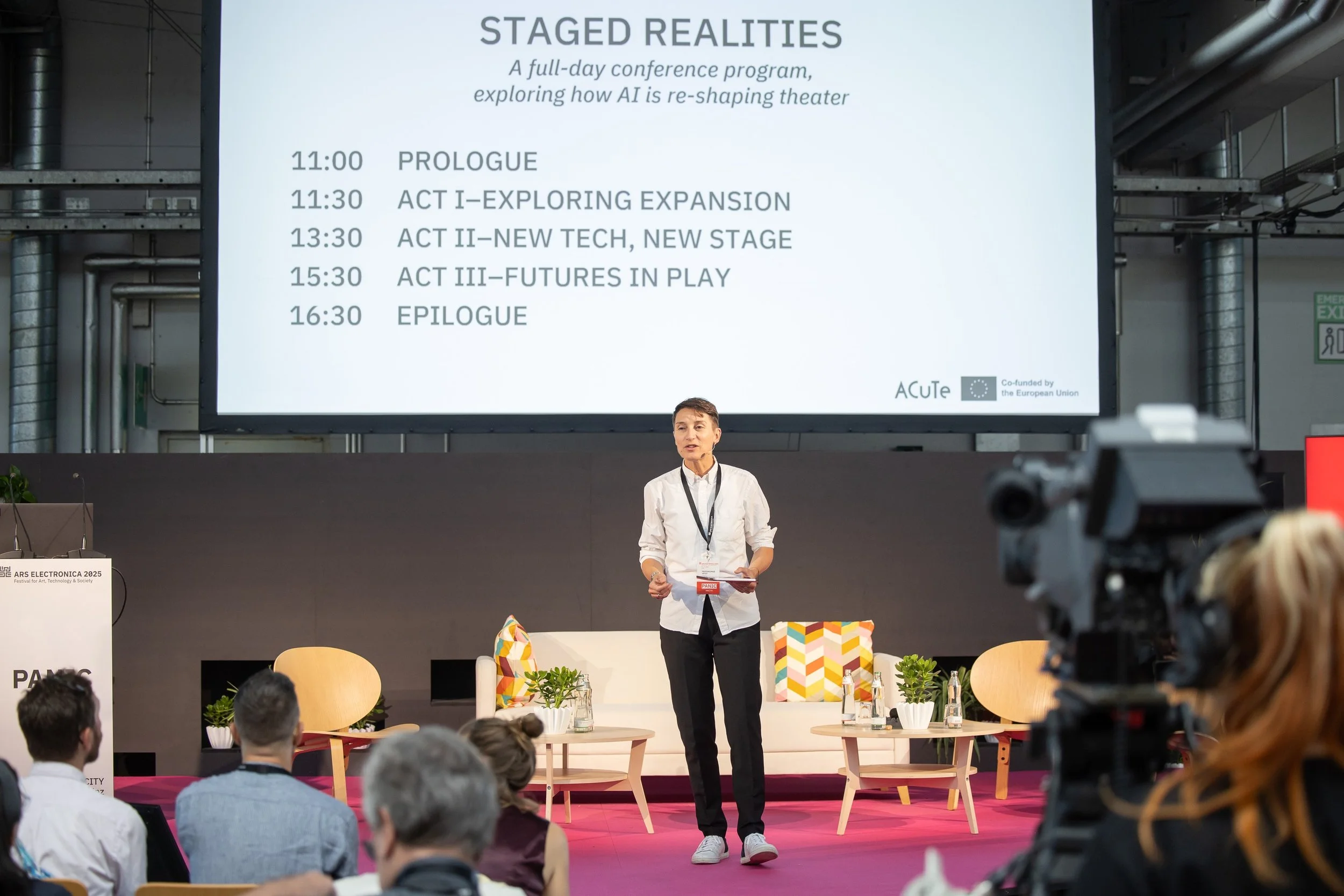
Photo: flap / AC Coppens at the Staged Realities Conference, Ars Electronica 2025
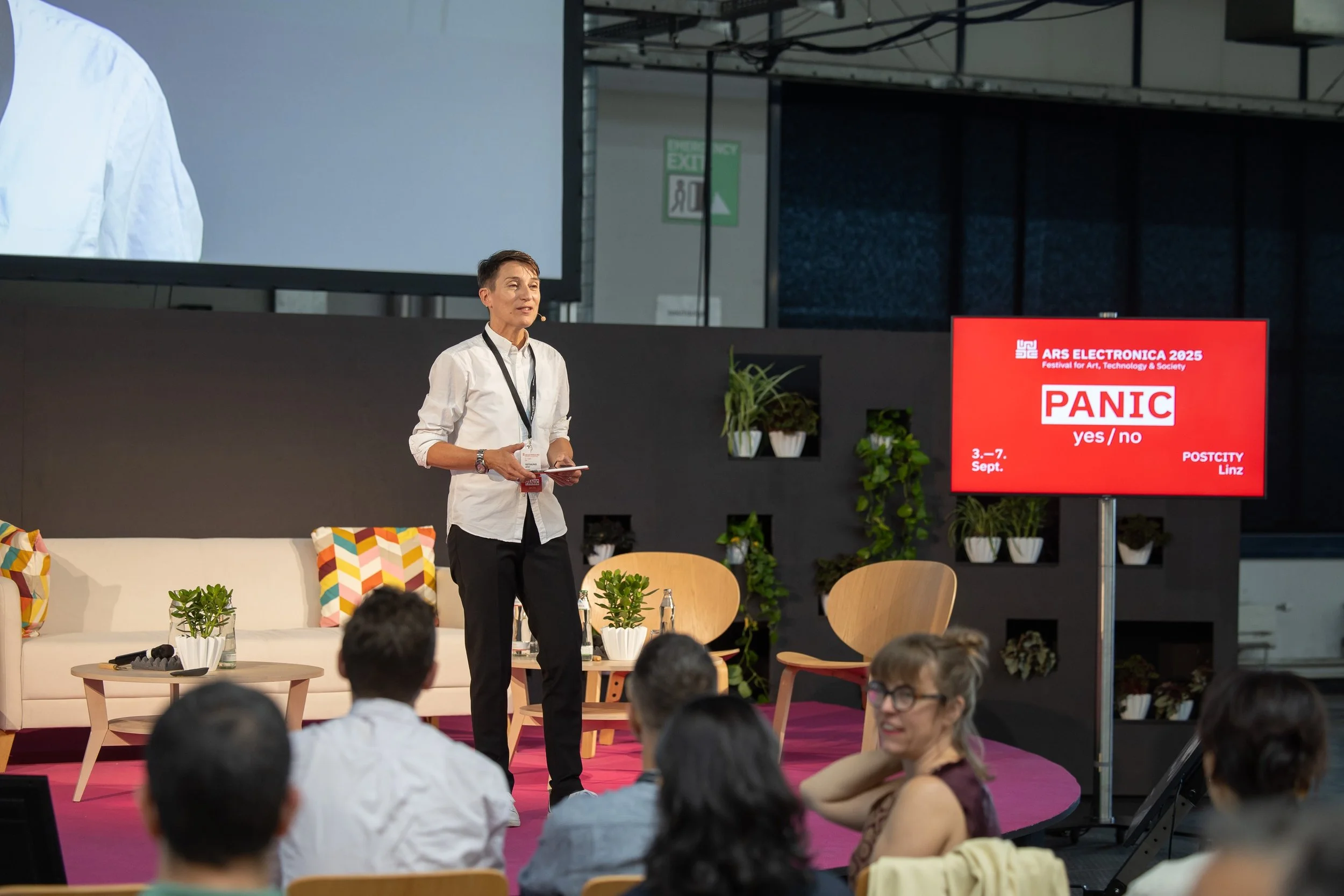
Photo: flap / AC Coppens at the Staged Realities Conference, Ars Electronica 2025
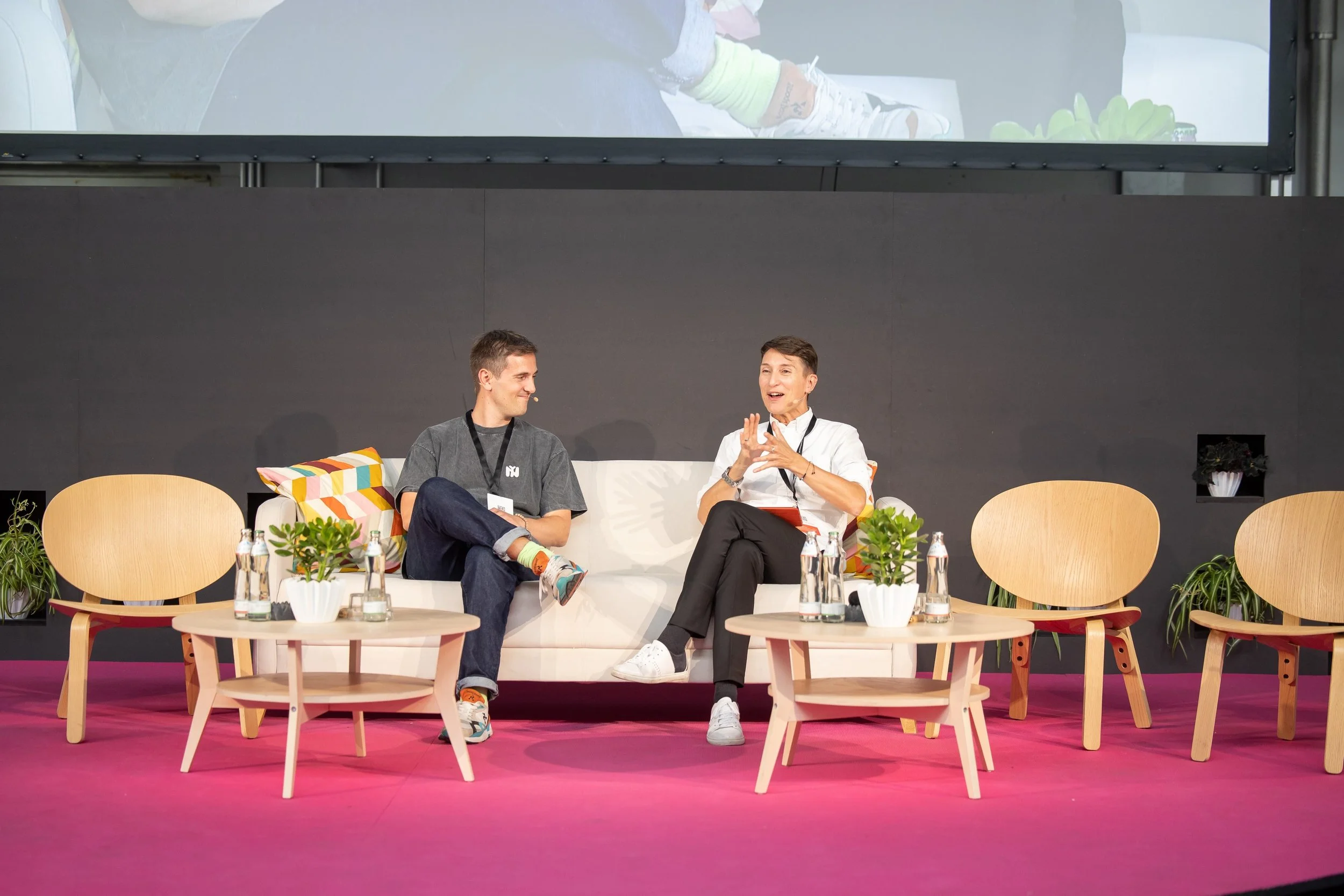
Photo: flap / From left to right: Matthieu Lorrain, AC Coppens at the Staged Realities Conference, Ars Electronica 2025
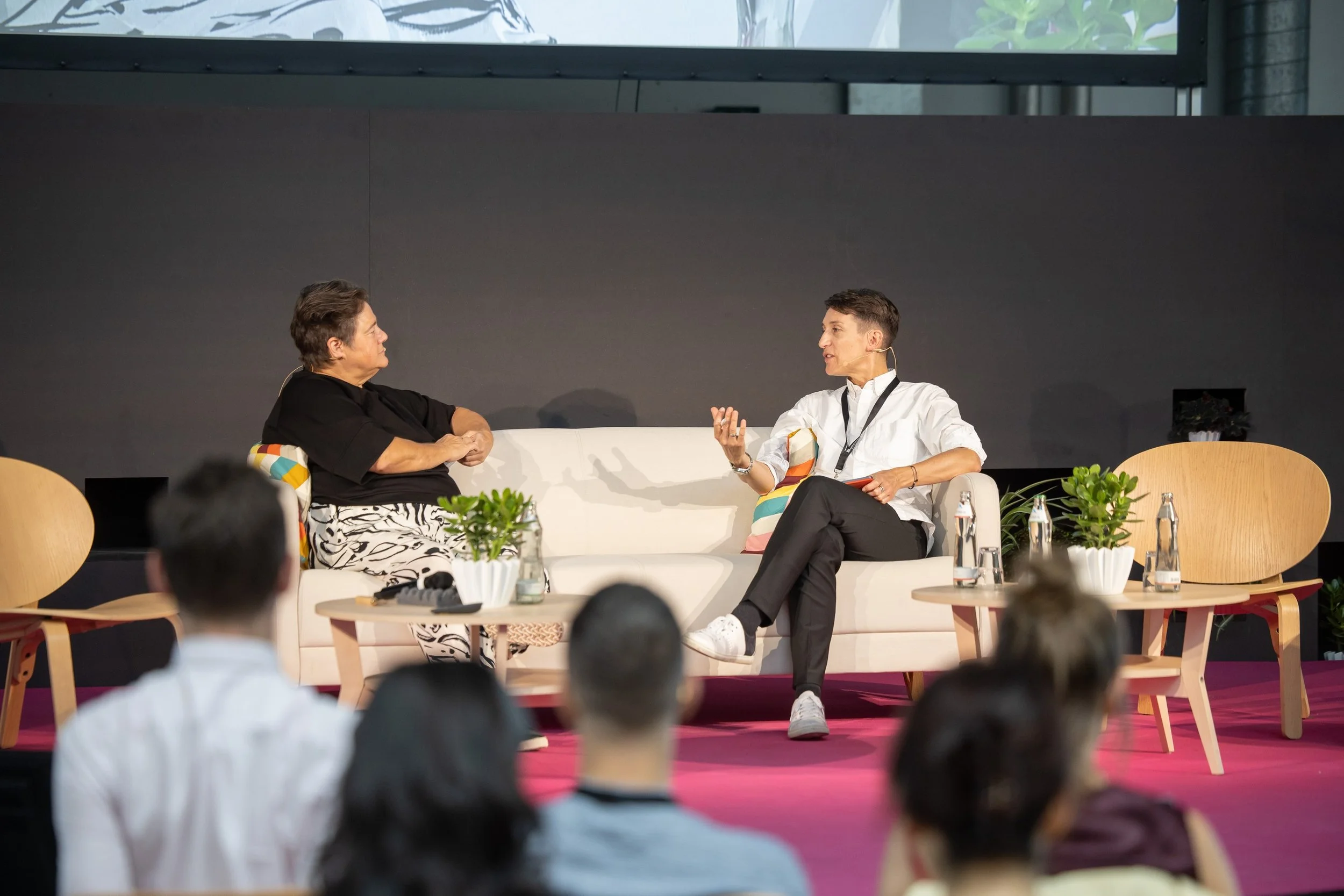
Photo: flap / Tawny Schlieski, AC Coppens at the Staged Realities Conference, Ars Electronica 2025
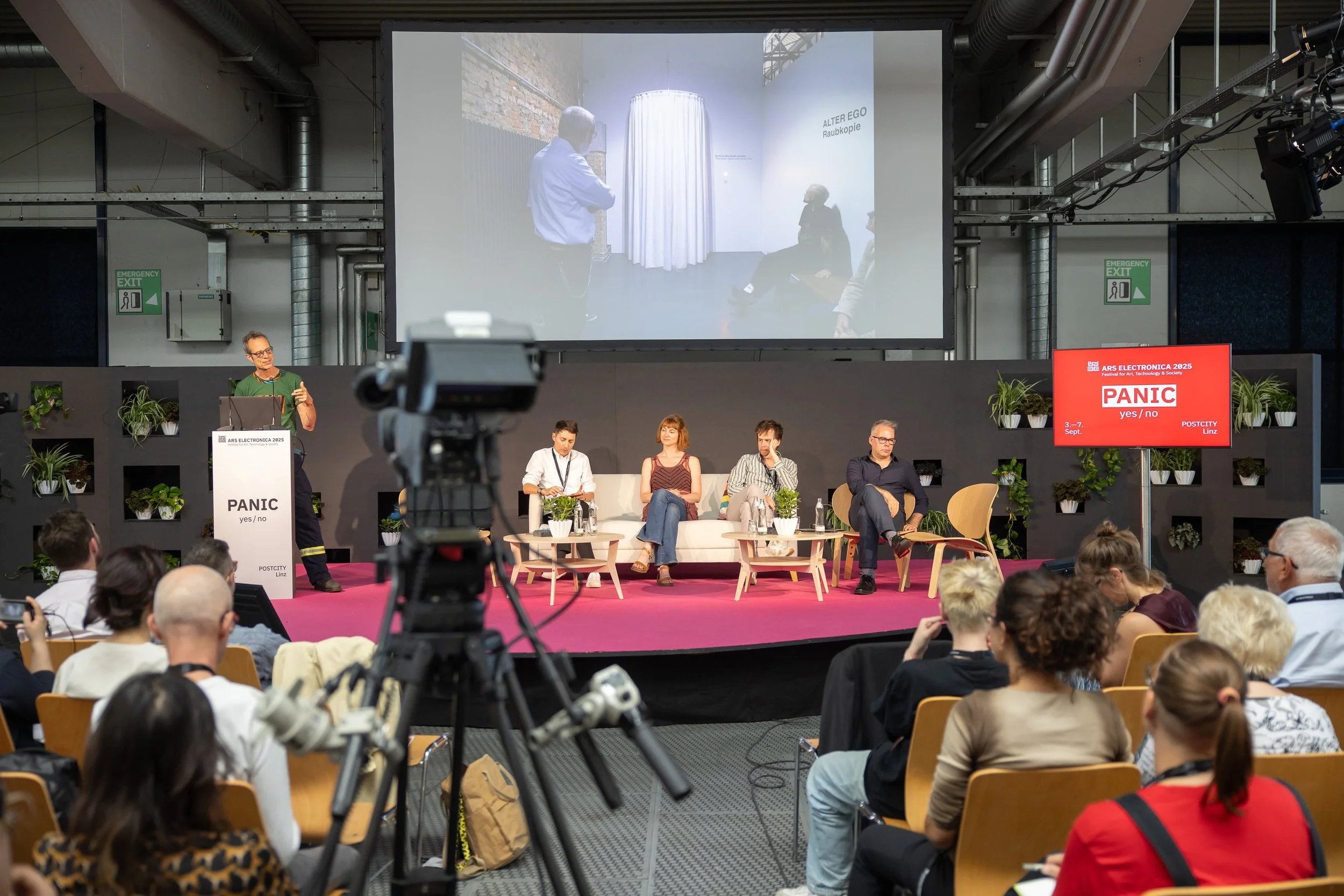
Photo: flap / From left to right: Stefan Kaegi, AC Coppens, Heather Knight, Anders Hasmo, Marcus Lobbes / Staged Realities Conference at Ars Electronica 2025
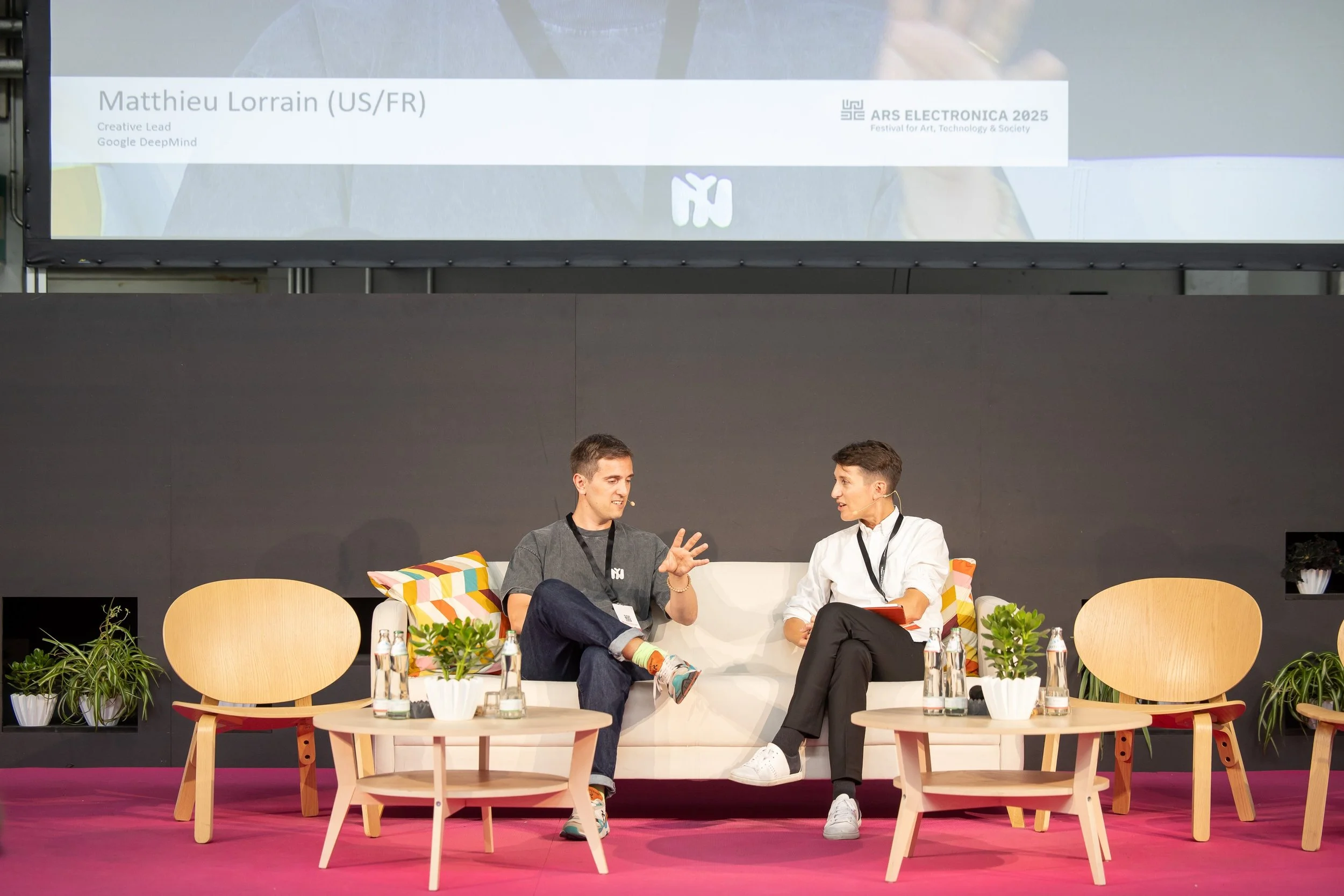
Photo: flap / From left to right: Matthieu Lorrain, AC Coppens / Staged Realities Conference at Ars Electronica 2025
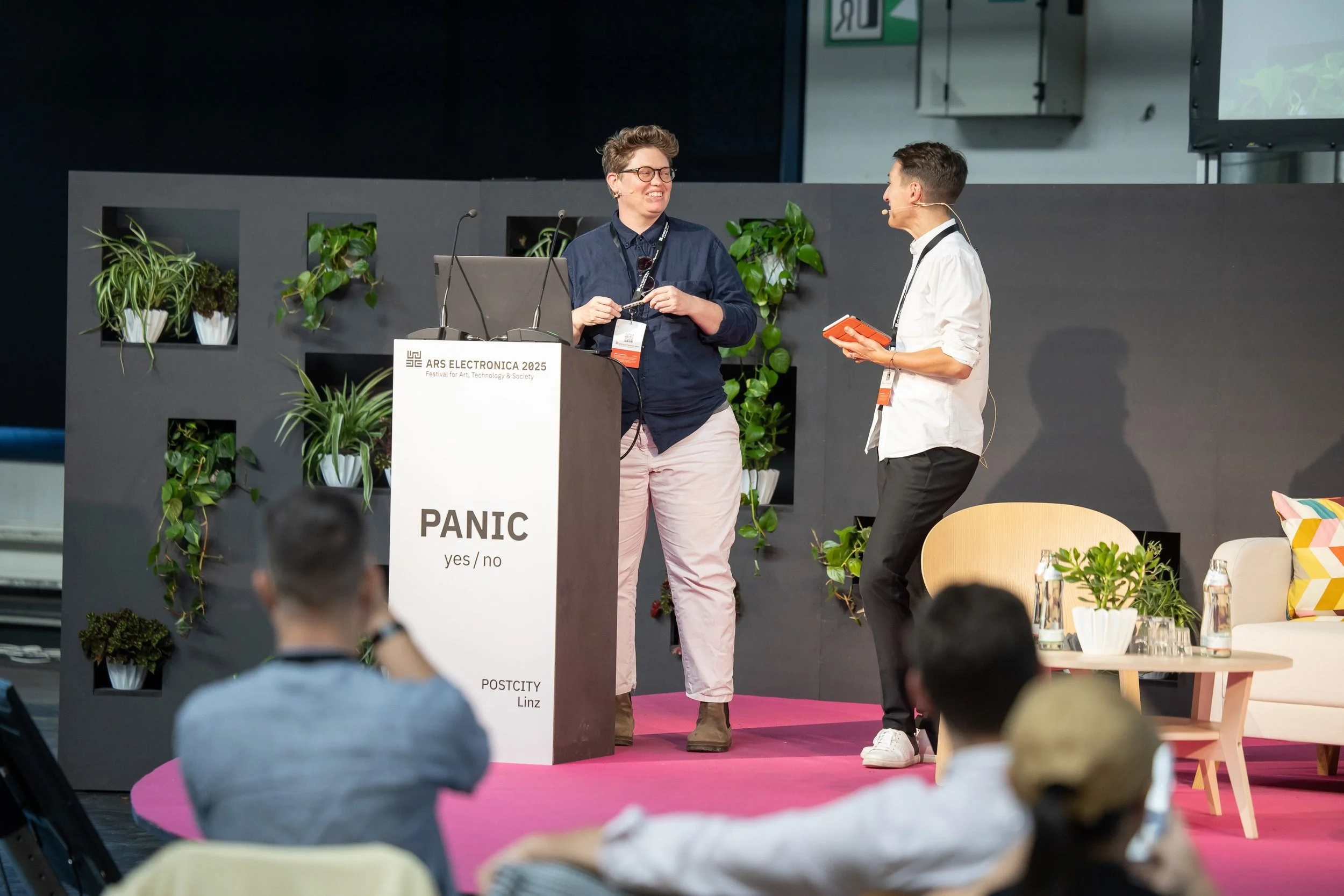
Photo: flap / From left to right: Sarah Ellis, AC Coppens / Staged Realities Conference at Ars Electronica 2025
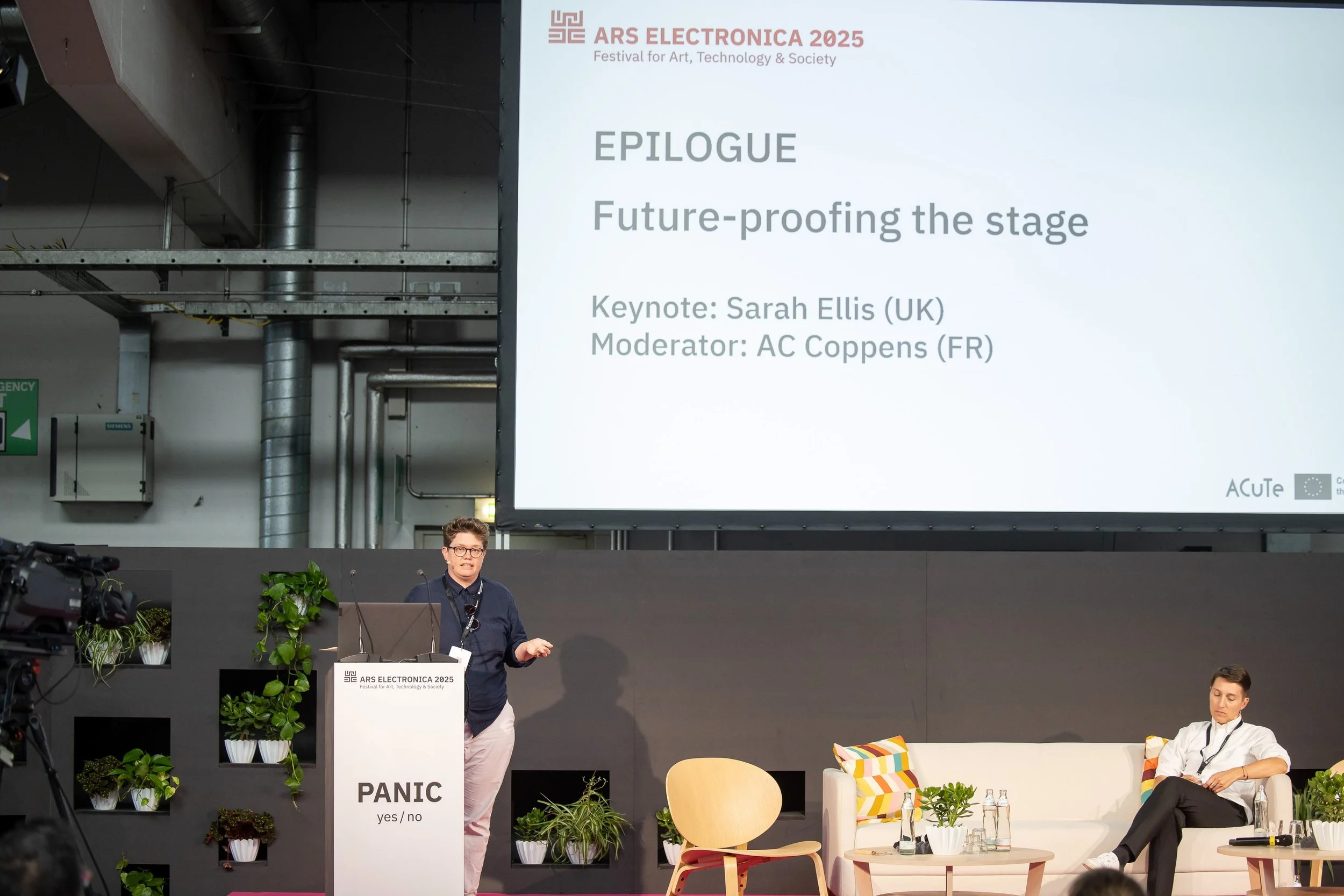
Photo: flap / From left to right: Sarah Ellis, AC Coppens / Staged Realities Conference at Ars Electronica 2025
AI & Artistic Creation
In 2024, we were invited by Ars Electronica to curate their “AI and Artistic Creation” program. We’ve been curating and talking about AI for years now, but to focus on this particular angle has been a great opportunity to think in depth about art, tech, humans, and how it all comes together.
For our second year of collaboration with the great Ars Electronica team, we took on the theme HOPE, and within it AI AND ARTISTIC CREATIVITY. A day of thought-provoking sessions, interactive workshops, and inspiring case studies on AI and creativity.
Here’s a little taste on how we built the narrative:
➔ We started with the igniting point of creativity: our brains. AC was delighted to see Anil Seth again after their session together at TED - the person talk about consciousness and what it has to do with creativity.
➔ Then straight into the practical: case studies of artists from different fields who have found a unique voice by putting AI as a focal point in their creative work. A series of presentations by Paul Trillo, Sasha Stiles, Marta Verde Baqueiro, Maria Arnal Marín.
➔ As we've covered ‘me, my brain, and AI’ at this point, we needed to add another layer of complexity through future collaborations made possible by AI. Tamiko Thiel, Thor Magnusson, Felipe Sánchez Luna and Brigitta Muntendorf walked us through their different models of collaboration in this panel moderated by the director and co-founder of the LAS Art Foundation, Dr. Bettina Kames.
➔ Next up an interactive session all about infrastructures through six angles:
Role of Cultural Institutions: from Financing to Networking
Focus on Education
Ethics, Data Sovereignty, Decolonizing
Law, Regulations & Policy
Product Development & Community Design
Platforms & Tools
How does it work now, and how should it tomorrow? We discussed with LaJuné McMillian, Tiara Roxanne, Micaela Mantegna, Ingrid Kopp, Hilary Mason and Margarita Grubina in a panel, followed by parallel AMA sessions.
➔ Then a keynote on legality, ethics and aesthetics in an interactive lecture by Micaela Mantegna.
➔ And the big question: VALUE. The value of the art is usually tied to the artist - so what changes when AI becomes part of it? From copyrights essentials by Lisa Käde to a fireside chat about the value of art from the market perspective with Jo Lawson-Tancred, this session questioned the price tag of of art and AI.
➔ We wrapped up the day with a philosophical discussion with Hito Steyerl, a visionary artist with a critical eye for the political economy of AI.
➔ We also had interactive AI Bingo running throughout the day for those on site. Once again AC was asked to host the full day and was delighted to do so.
More details on the sessions can be found below.
-
Cognitive and computational neuroscientist Anil Seth is recognized as among the 0.1% most impactful scientists in terms of publications. A recurring TED speaker, he will start off the day by dissecting the “purely human” vs the machine: Where does creativity start, where does it come from? Can computers be creative at all?
In this fireside chat moderated by AC Coppens, we will explore the intersection of consciousness, creativity and AI with clarity and nuance. What is the role of biology in shaping our ability to create and innovate? Seth will discuss the concept of anthropocentric biases and explore the workings of the brain as a prediction machine. Could this be the origin of inspiration?
-
Artists who have found a unique voice by placing AI at the core of their creative work talk to us about best practices and stories of failure, new possibilities and current limitations. In a series of presentations spanning digital art, music, film and poetry, we map the potential that AI brings to the art world—from digital twins to combining soul with the machine, from embracing the unexpected to projects that can finally see the light of day thanks to AI. How can AI ignite the spark to help find a fresh creative voice?
-
AI not only fosters new collaborative practices between humans and machine; it also creates new cooperative frameworks across the creative ecosystem that often extend beyond particular fields of art.
Will AI usher in an era where art becomes more collaborative and iterative? Artists from various fields, including music, games, and performative arts will share their experiences of cooperation: how they collaborate within collectives, how they include protagonists, communities and audiences in their creative process and how they work with technology companies.
-
As the impact of AI grows, it is crucial to examine collectively the infrastructures and frameworks needed for the artistic ecosystem to fully embrace the creative potential of the technology. In this interactive fishbowl session, participants will have the opportunity to share their thoughts and engage in a dialogue with artists, technologists, educators, institutions and policymakers.
What constitutes AI infrastructures for (digital) art? Which frameworks should be implemented to not perpetuate global inequalities? How can Europe best support the ecosystem in AI-driven artistic innovation? What roles do education, ethics and design play? Should the ecosystem be regulated by law, and if so, how?
-
This session begins by examining the concept of creativity: Can we truly conceive of “artificial creativity”? Is AI capable of true innovation, or is it a tool reflecting human input?
As AI-generated art becomes indistinguishable from human-created works, should we think of a “Turing test” for creativity? Does this blurring of lines influence how we legally define or protect such creations?
The session will also showcase examples of how AI is creating new visual narratives and redefining reality by repetition of facts, establishing ontological aesthetics and semantics.This session begins by examining the concept of creativity: Can we truly conceive of “artificial creativity”? Is AI capable of true innovation, or is it a tool reflecting human input?
As AI-generated art becomes indistinguishable from human-created works, should we think of a “Turing test” for creativity? Does this blurring of lines influence how we legally define or protect such creations?
The session will also showcase examples of how AI is creating new visual narratives and redefining reality by repetition of facts, establishing ontological aesthetics and semantics.
We will also challenge if IP philosophical foundations can sustain the rapidly changing digital reality, and whether the systems in place truly serve the artists they claim to protect.
Tracing copyright history and reflecting on its “negative spaces”, we’ll illustrate the paradoxes of copyright law in the digital age, where frameworks built on philosophical rationales of intellectual scarcity are strained by the new reality of digital abundance.
By examining the frictions that AI poses to copyright and critiquing the fairness of systems for creators, we challenge the notion that expanding copyright to cover training data will ensure financial gains for creators. Moreover, we showcase how the current wave of AI litigation can have unintended consequences for society and creators, by shrinking the definition of “fair use” and the commons. -
A presentation by Lisa Käde followed by a talk with Jo Lawson-Tancred.
The value of art is already an intricate and ever-evolving subject, depending on many parameters which can make pricing and remuneration a tricky subject. How do the landscape, values and value chains change when AI is introduced?
Examining creative commons, licensing and IP is the base of this conversation, but we need to consider who is making money, who is not, and what is changing in the ecosystem at scale.
-
We will close the day with a fireside chat with Hito Steyerl, a visionary filmmaker, moving-image artist, writer and innovator of the essay documentary. With a keen interest in media and technology and a PhD in philosophy, Steyerl brings a unique and critical view on AI’s role in the art world.
Is there value in AI art? Is it a creative tool, or are we beyond that phase already? In a world where big tech tools are often unfairly trained, non-transparent and rely on exploitative infrastructure, how should we navigate their use? Can AI serve as a tool of critique, and help us envision a radically different future? Hosted by AC Coppens, this conversation will weave in questions that emerge throughout the day.
Who owns the truth?
In 2023, we were invited by Ars Electronica to curate a two day conference program.
We created spaces of encounter where culture and science intersected, exploring futuristic visions, and profound philosophical and social critique, providing opportunities for re-evaluating existing points of view. Through interactive sessions, keynotes, panels, and workshops, we contemplated the true value of ownership, and how it all relates to nature and technology.

Ars Electronica23 ©Markus Schneeberger

Ars Electronica23 ©Markus Schneeberger
(Un)Earthing the Truth – Ownership and Narratives about the Planet
A More-than-Planet Conference
Focusing on a way to actively shape a more sustainable and positive future, the second part of the day examined existing narratives around nature and environmentalism and featured discussions on reclaiming our ownership as well as governance structures to foster resilience and activism.
On the second day of Ars Electronica’s Theme Symposium, we questioned the true value of ownership concerning our planet. Interactive sessions, keynotes, panels, and workshops were designed to further our understanding of environmental and social responsibility and recontextualize the entitlement we have towards the planet and environmental commons. In the first block, we examined the underlying economic structures and capitalistic systems in place to question: Who owns nature, or rather, can it be owned? Is there a way to financially combat the climate crisis and find an economic equilibrium?
-
In an interactive and public session, we explored the idea of ownership and the value we place on both tangible and intangible possessions. We contemplated whether it is possible for anyone to truly own anything. Can a person really claim ownership of a house plant, an animal, the planet or national resources? What about their own emotions or a narrative?
-
Dr. Sian Proctor is one of the astronauts of SpaceX Inspiration4 as well as a geology professor and science communicator. During her keynote, she discussed space ownership, ethics, and governance, as well as the ecological and economic impacts of space exploration, emphasizing the potential effects of privatization and colonization. She pointed out that one's perspective can shift when viewed from outer space.
-
The parallels between deep sea and space exploration are a perfect reference point to examine the intricate relationship between humanity, technology, and ecology. Dr. Sian Proctor was joined by Pradeep Singh, specializing in environmental and resources law and by Ocean Law and Policy Analysts Mekhala Dave.
-
A deep dive into financing the commons with a keynote by Prof. Dr. Dr. Stefan Brunnhuber.
-
Prof. Jakob Kapeller summarized and reviewed current investment projections for the EU and discussed the prospects for achieving carbon neutrality.
-
Presentation of the Grand Prize Winners, Daisy Ginsberg and Richard Mosse.
-
S+T+ARTS PRIZE 2023 winners Daisy Ginsberg and Richard Mosse, alongside Tero Toivanen, PhD, co-founder BIOS Research Unit, joined a conversation moderated by Marleen Stikker.
-
A deep dive into the narratives that influence nature preservation with Kenyan carnivore ecologist Dr. Mordecai Ogada.
-
A workshop led by Prof. Angie Abdilla, in which we explored how to rewrite narratives while working with raffia.
-
Aina Abiodun, a climate leader, filmmaker, and entrepreneur, delivered the closing keynote. She is also the first Black woman to lead a venture-backed tech company in Germany. Abiodun's presentation focused on the importance of taking control of our relationship with nature in order to create a sustainable and equitable future.
End of Truth?
Technological processing and communication of information and knowledge have undergone a drastic shift: a knowledge revolution impacts every facet of our society. In navigating the skepticism against facts and truth in the digital age, we delved into the intricate tapestry of technology, power dynamics, politics, and truth.

Ars Electronica23 ©Philipp Greindl
On this third day, our focus was directed toward the ownership of technology, which could be considered as commons, and how our relationship with truth undergoes a transformative process amidst technological advancements. Facing the challenges of distinguishing fact from fiction in the digital age head-on, leads us to question: Is there an end of truth upon us?
The morning sessions illuminated the influence of AI on our world and the pernicious role misinformation plays in undermining our democracy. As the day progressed, we turned the lens inward, questioning our ties with misinformation and its implications for our humanity.
Who indeed owns the truth? How does subjective sovereignty over truth intersect with our ideas of democracy? Can we distinguish fact from fiction amidst this maelstrom of knowledge?
This Ars Electronica theme Symposium was co-hosted by EUMETA - EUROPEAN SCHOOL OF METAVERSE.
-
How is the development of technology embedded in economic, political, military and ideological power structures? An informative and multifaceted perspective brought by Fabian Scheidler, author of The End of the Megamachine. A Brief History of a Failing Civilization.
-
The Department of Psychology at the University of Cambridge developed the Misinformation Susceptibility Test to better understand the underlying factors contributing to susceptibility to misinformation, in order to effectively combat it. In this playful interactive session, we checked how susceptible the audience was to misinformation, and explored the science behind that.
-
As AI can be used to manipulate public opinion of both citizens and elected leaders alike, we are risking the erosion of trust in democratic institutions. This talk by Dr. Sarah Kreps proposed a set of guardrails to mitigate against the harmful uses of generative AI.
-
Univ.-Prof. Dr. Meinhard Lukas introduced the main challenges for public discourse stemming from the use of AI and Large Language Models.
-
Following the talk by Dr. Sarah Kreps and the introduction by Univ.-Prof. Dr. Meinhard Lukas, both speakers joined a panel together with Minister of Digital Affairs of Taiwan Audrey Tang and Founder and CEO of DemocracyNext Claudia Chwalisz on: How can democratic structures evolve to secure the future of governance in the age of AI.
-
Prof. Dr. Dr. Stefan Brunnhuber gave an exploratory talk on AI opening up a new digital frontier that transcends traditional boundaries of humanities and science.
-
Nina Jankowicz is a disinformation expert and the author of How to Be a Woman Online and How to Lose the Information War. Marta Peirano is a journalist and researcher specializing in the relationship between technology and power. They shared a lively, on point and intimate fireside chat on how to navigate unreliable information environments.
-
Cailin O’Connor co-author of The Misinformation Age: How False Beliefs Spread, Nandini Jammi founder of Check My Ads Institute, Ken Moriyama, Chief Executive Officer, Godot, Nerima Wako political analyst, CEO of Siasa Place and moderator Sarah Kriesche discussed what we can still believe and how we can combat misinformation.
-
An interactive talk on how to spot fake images. Florian Schmidt, head of the fact-checking department at APA and Valerie Schmid, responsible for researching and editing gave practical guidelines for verification of visual content.